
Copper-Nickel-SiliconBeryllium-freeIn production
Siclanic S
CuNi2Si
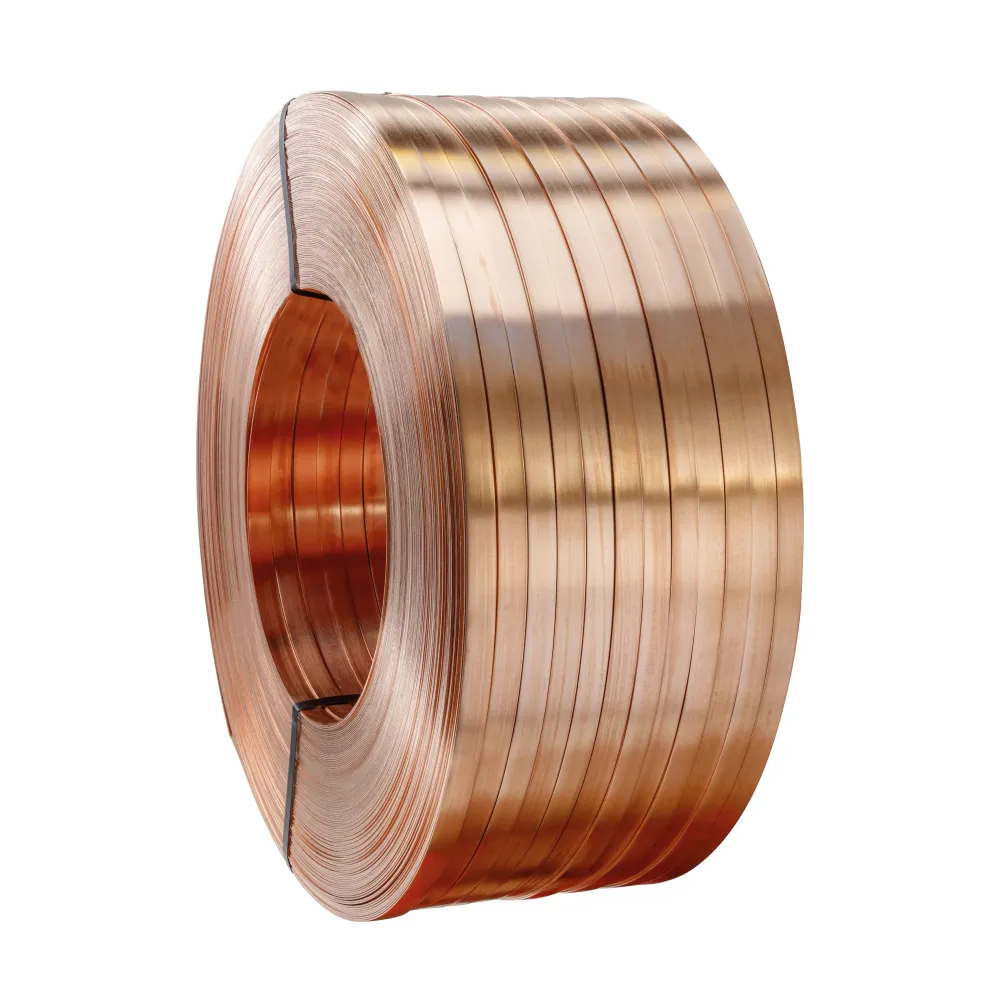
Siclanic S is a CuNi2Si strip hardened by heat treatment. Makers of switchgear, relays and thermostats use it for contact blades and springs that carry current and flex repeatedly.
140–590 MPaYield strength
270–630 MPaTensile strength
3–30 %Elongation
8.9 g/cm³Density
Specify this grade
Qualification packs are released after a short form. Export control applies.
Properties
Guaranteed values, by temper.
- Alloy family
- Copper-Nickel-Silicon
- Chemistry family
- CuNiSi
- Lead-free
- Yes
Forms
Forms & dimensions available
Strips6 variant(s)
Dimensional ranges and tolerances on request — machining and finishing are in house.
Standards
Standards & equivalences
- CW111C
Product and process qualifications are listed above. Customer approvals are confidential and are not disclosed.
Applications
Markets & applications
Applications
- Conductive contact blades for switches and circuit breakers
- Relay springs and relay blades
- Parts for thermostats, pressure switches and contactors
- Automotive commutators
- Washers for pressure-sensitive switches
Why this grade
Formable before heat treatment, then hardened to its final strength.
Electrical conductivity combined with fatigue resistance for moving contacts.
Resists stress relaxation under thermal load.
Suited to stamping, bending, coating, soldering and welding.
Alternatives
If this grade is not the right trade-off.
GradeChemistryYield strengthChoose it when
Siclanic SYou are hereCuNiSi590 MPaChoose it when the part is stamped or bent from strip, such as a contact blade or relay spring, where NS30, NS5 and NS6 are supplied as bars.
NS30CuNiSiCr800 MPaChoose it when strength and heat dissipation come first, as in valve seats or mould inserts, and the part needs less electrical conductivity than NS6 or NS5 provide.
NS5CuNiSi590 MPaChoose it when the part must comply with CW111C, 2.0855, DTD 498 or NFL 14701, or works near seawater, and NS30's higher strength is not needed.
NS6CuNiSi590 MPaChoose it when the bar becomes resistance welding parts or electrodes, where RWMA Class 3 and conductivity matter more than the strength of NS30 or the standards covered by NS5.
NS8CuNiSiCr
Siclanic FCuNiSi
Siclanic MCuNiSi